
Home

Welcome to the make-a-thek digital toolkit!
This is your starting point to explore how your library can become a creative, circular and inclusive space. Assess your current situation, discover tailored resources and explore real examples from libraries across Europe. Whether you are starting from scratch or developing an existing space, the toolkit supports your journey one step at a time.
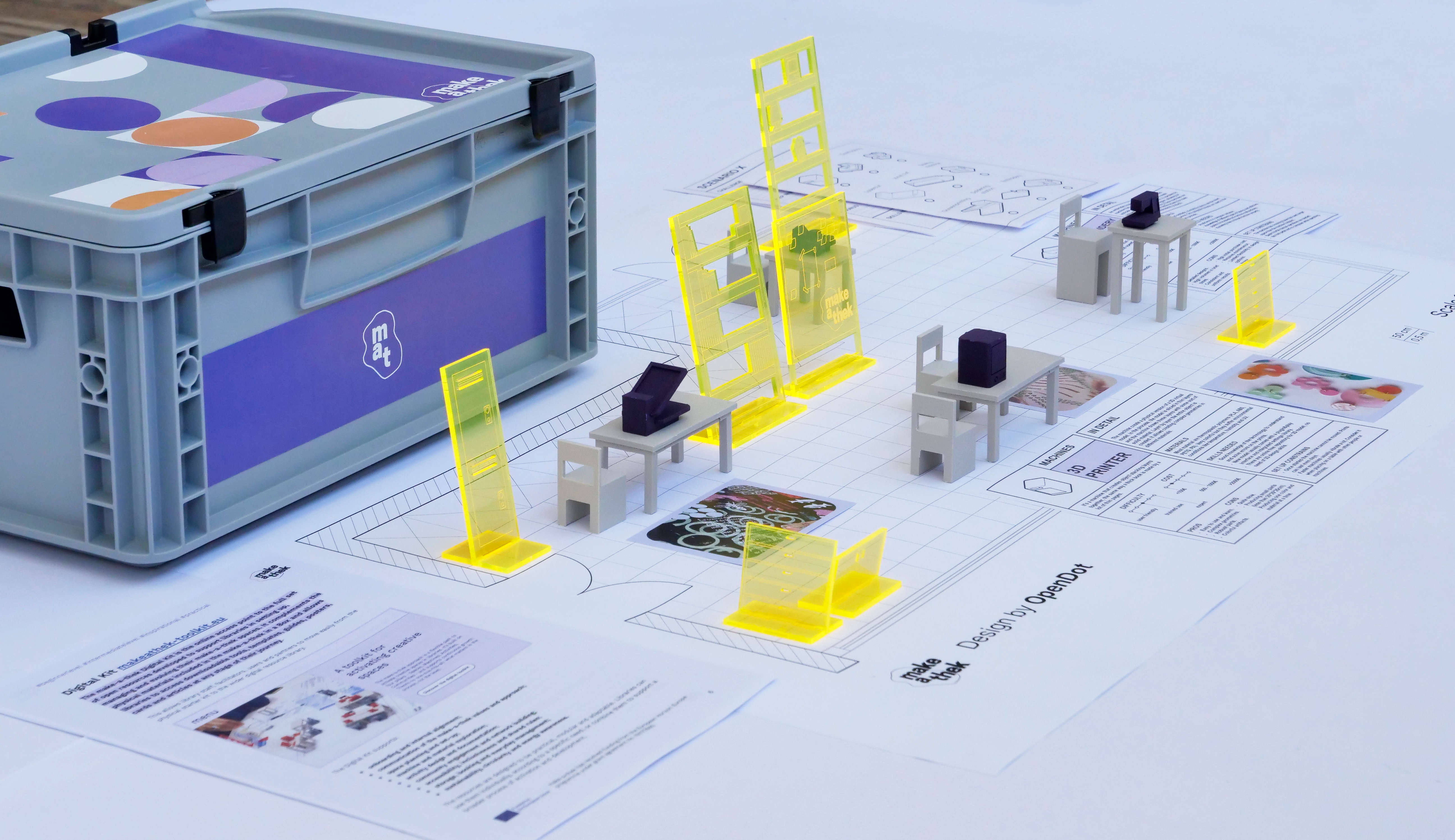
A toolkit for activating creative spaces
The make-a-thek approach is a flexible methodology for activating creative spaces in libraries.
It is built around six interconnected pillars - Physical Spaces, Tools & Machines, Materiality, Activities, Network and Communication - and supports libraries as their spaces, skills, communities and practices evolve.
There is no one-size-fits-all solution: what matters is the process, not the level.
Discover the toolkit
Three ways to explore the toolkit
Choose the path that best matches your experience, needs and level of autonomy. You can begin with guided recommendations, focus on a specific area or explore all available resources freely.

Start with a questionnaire
Answer a short set of questions about your library, your current experience and your priorities. You will receive tailored suggestions and resources to help you identify useful next steps.

Explore by pillar
Browse the six dimensions of the make-a-thek approach: Physical Spaces, Tools & Machines, Materiality, Activities, Network and Communication. Choose a pillar to find focused guidance and examples.
Browse the repository
Already know what you need?
Explore the complete collection of tools, guides, templates and articles, and filter them by pillar, type and level.
Get to know the make-a-thek approach:
Before exploring the resources, discover the shared values, concepts and principles that shape the make-a-thek methodology.
GLOSSARY
A strong network starts with a shared language. Explore the glossary and let these words speak to you and your community.
Download the Glossary
MANIFESTO
What drives us can inspire you too. Make the Manifesto your own: share it, spread it, and let its values guide your actions.
Download the Manifesto
FAQ
The make-a-thek approach is a flexible methodology for activating and evolving creative spaces in libraries. It connects six interdependent dimensions: Physical Spaces, Tools & Machines, Materiality, Activities, Network and Communication. It does not prescribe a single model or a fixed sequence. Libraries can begin from their own context, needs and available resources, and develop different dimensions over time.
You can start with the questionnaire, explore one of the six pillars or browse the full repository. The resources can be used individually to address a specific need or combined to support a broader process of planning, activation, management and development.
Yes. The toolkit can help you assess your current situation, identify needs and opportunities, explore different types of spaces and understand which first steps may be realistic for your library. You do not need to have a complete plan before starting.
No. A make-a-thek space can be permanent, temporary, pop-up or distributed across different areas of the library. You can start with existing spaces, simple tools and low-barrier activities, provided that the purpose, rules and conditions of use are clear.
Yes. The resources are openly accessible and can be downloaded and used by libraries, facilitators, community organisations and other interested actors. Where indicated, some resources can also be adapted to local needs.
Yes. The make-a-thek approach is designed to work across different library contexts, capacities and experience levels. A library can begin with simple tools, existing furniture, partnerships and introductory activities. Machines alone do not define a makerspace: people, learning, accessibility, communities and continuity are equally important.
The toolkit includes introductory and recurring activity formats related to making, repair, reuse, materials, fashion, crafts and digital fabrication. Activities can use analogue tools, digital machines or a combination of both, depending on your audience, skills and resources.
No advanced technical skills are required to begin. The toolkit provides practical guidance, examples and resources to help library staff develop knowledge gradually. For more specialised machines or activities, libraries can work with trained colleagues, local experts, makers, designers or community partners.